According to a CareerBuilder survey, 69% of employers use social media to find or research potential job candidates. Here’s the kicker: that survey data is 7 years old. I imagine that figure increased to 90% or higher.
I’ve been rehearsing my presentation on the visibility topic for the WomenTech Network Conference on May 14 at 1:40 pm ET. It’s entitled “57% Invisible: Why Your Online Brand Is Blocking Career Growth.”
If you’re interested in attending the 4-day virtual conference, I’m offering 2 free tickets. First-come, first-served. Please DM on LinkedIn messaging.
Visibility Stack Framework
I’m always telling my clients to think like an executive recruiter. After all, your online presence is your first interview.
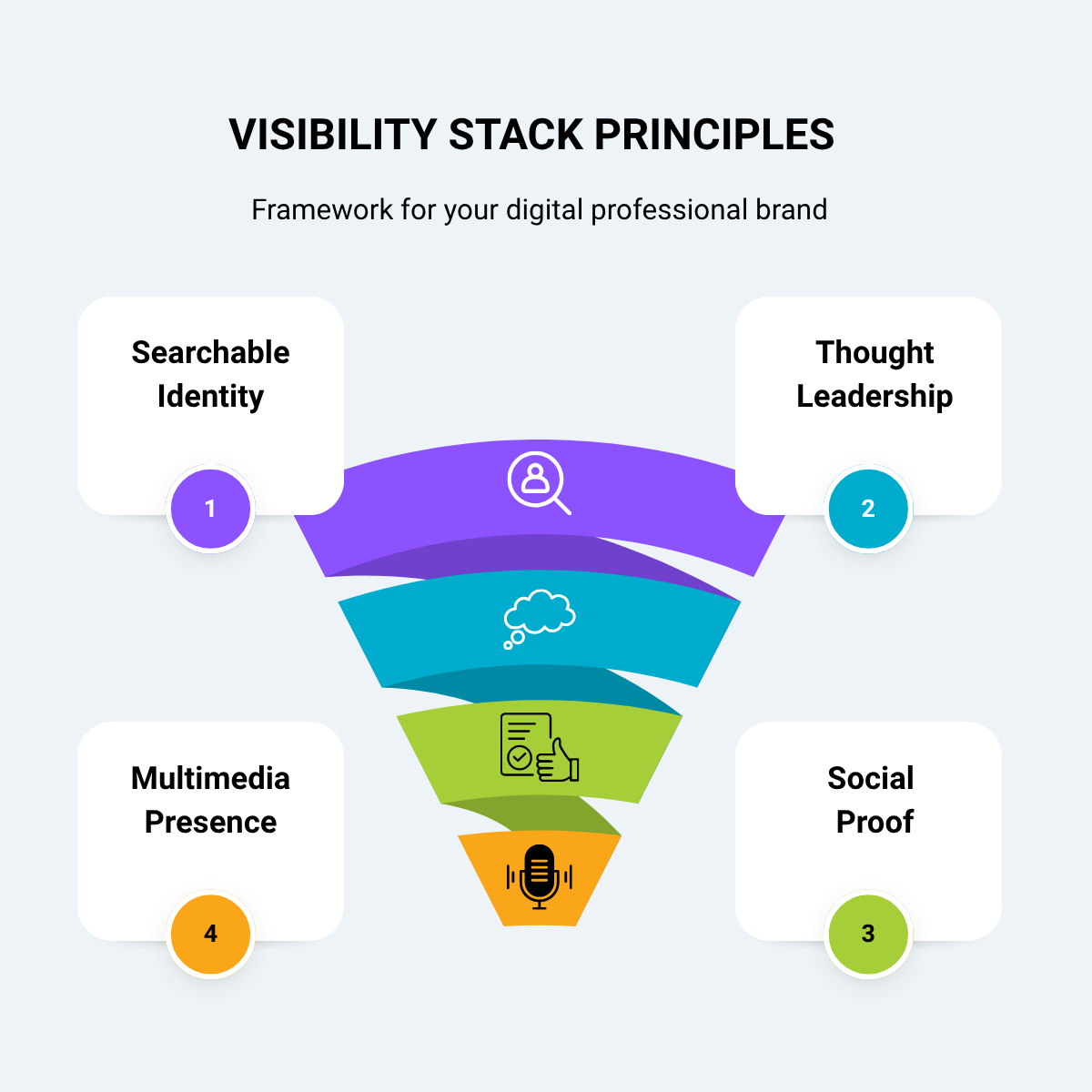
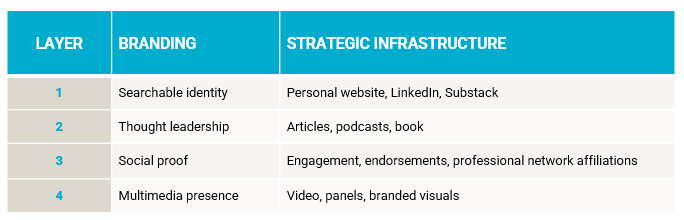
The Visibility Stack Framework I developed for professional branding has 4 layers. The basic Layer 1 level is whether you show up online. Layer 2 builds upon that, highlighting your professional expertise in print and multimedia. Layer 3 builds on that with your networking and recognition by others as a strategic advisor and influencer. Layer 4 is your audio-visual presence within the professional environment.
Last month, I deep-dived into Layer 1 of being searchable online for recruiters. A short recap, Google yourself and see what shows up … or doesn’t.
Today, I’ll focus on how to become a thought leader. I’ll share my pivot from being a corporate brand consultant for Coca-Cola, General Motors, and the U.S. Army to a professional brand consultant for technology executives seeking their next big-impact role.
For 18 years, I was a marketing and sales executive for Fortune 250 companies, which allowed me to retire early. But I got bored and pivoted, going back to school to become a certified executive career coach.
My challenge: How could I attract clients?
Layer 2 Thought Leadership
So, where to start if you’re at ground zero? It was time to build a website for my consulting company. I have experience selling web hosting, but I was clueless about website design.
I solicited 3 bids from web designers. After considering their costs ranging from $2,500 to $10,000, I decided to go the DIY route.
I researched and found the best domain name (resumetech.guru) from Namecheap. The best hosting provider for my needs was Bluehost, which bundles hosting, storage, WordPress, and Microsoft Outlook integration. I signed up for a customizable theme on the Envato Marketplace. I rounded this all out with security and design plugins. Three months later, I was up and running.
Once www.resumetech.guru was live, I maintained a cadence of writing, without the help of Generative AI, several 1,500-word, full-length articles per month, providing career tips to technology executives. I repurposed these articles on LinkedIn and Instagram.
There’s power in being an expert in someone else’s newsletter since they can amplify my point of view to their audience. I weighed in as a career expert for the Jobscan ATS (Applicant Tracking System) app’s online newsletter, and I responded to requests on Featured.com (bridges subject matter experts and publishers), Help A Reporter Out (HARO.com), and from a business writer at The Seattle Times Newspaper.
Within 2 years, I had published 50 articles on LinkedIn and my website.
One day, while we were having breakfast, my husband said, “You should write a book based on your client stories.” I knew nothing about writing a book, so I took an 8-week book-writing course from Dr. Cindy Childress. After hiring an editor, soliciting a colleague’s editorial insight (thanks, Mark!), and landing an illustrator, I self-published my book, which is available at Amazon, Barnes & Noble, and the U.S. Library of Congress.
Building the Lead Funnel
In parallel to writing, I needed to find leads. As a career coach, I found a couple of good options for leads: LinkedIn Services Marketplace and LinkedIn Premium Business.
The LinkedIn Services Marketplace is free to sign up for if you have a Premium or Sales Navigator subscription. The options for people seeking help include resume coaching, executive career transition, interview prep, and leadership coaching. Clients would reach out to me, typically because I lived in Seattle and had a tech background with connections. They were looking for a role at one of the usual suspects, such as AWS or Microsoft.
My biggest source of leads early on in my career as a consultant was LinkedIn Premium Business, which cost over $600 annually. Seven years ago, it was a different offering featuring an abundance of inbound email leads for people seeking resume, LinkedIn, and interview optimization. Then, several years later, the number of daily leads dropped from over 30 to 1, so I canceled my subscription.
The good news is my client base grew to a national level, so referrals became my leads. My career consulting business flourished.
Although this year, I noticed a shift. More people are applying Gen AI to create their bios and resumes, as well as practice interview questions and answers.
The Point
Getting back to why your online brand is blocking career growth, you need first to establish a searchable identity.
And, more to the point, in line with the Visibility Stack principle of Layer 2, create influence and expertise by sharing stories and advice with others. As I’ve witnessed, your online visibility for career growth is no longer optional; it’s required to stand out, gain influence, and access opportunities.
Best of luck on your career journey.
Online visibility is no longer optional for your career growth; it’s required for influence and career opportunities.
According to a CareerBuilder survey, 69% of employers use social media to find or research potential job candidates. Here’s the kicker: that survey data is 7 years old. I imagine that figure increased to 90% or higher.
I’ve been rehearsing my presentation on the visibility topic for the WomenTech Network Conference on May 14 at 1:40 pm ET. It’s entitled “57% Invisible: Why Your Online Brand Is Blocking Career Growth.”
If you’re interested in attending the 4-day virtual conference, I’m offering 2 free tickets. First-come, first-served. Please DM on LinkedIn messaging.
Visibility Stack Framework
I’m always telling my clients to think like an executive recruiter. After all, your online presence is your first interview.
The Visibility Stack Framework I developed for professional branding has 4 layers. The basic Layer 1 level is whether you show up online. Layer 2 builds upon that, highlighting your professional expertise in print and multimedia. Layer 3 builds on that with your networking and recognition by others as a strategic advisor and influencer. Layer 4 is your audio-visual presence within the professional environment.
Last month, I deep-dived into Layer 1 of being searchable online for recruiters. A short recap, Google yourself and see what shows up … or doesn’t.
Today, I’ll focus on how to become a thought leader by pivoting from a corporate brand consultant for Coca-Cola, General Motors, and the U.S. Army to a professional brand consultant for technology executives seeking their next big-impact role.
For 18 years, I was a marketing and sales executive for Fortune 250 companies, which allowed me to retire early. But I got bored and pivoted, going back to school to become a certified executive career coach.
My challenge: How could I attract clients?
Layer 2 Thought Leadership
So, where to start if you’re at ground zero? It was time to build a website for my consulting company. I have experience selling web hosting, but I was clueless about website design.
I solicited 3 bids from web designers. After considering their costs ranging from $2,500 to $10,000, I decided to go the DIY route.
I researched and found the best domain name (resumetech.guru) from Namecheap. The best hosting provider for my needs was Bluehost, which bundles hosting, storage, WordPress, and Microsoft Outlook integration. I signed up for a customizable theme on the Envato Marketplace. I rounded this all out with security and design plugins. Three months later, I was up and running.
Once www.resumetech.guru was live, I maintained a cadence of writing, without the help of Generate AI, several 1,500-word, full-length articles per month, providing career tips to technology executives. I repurposed these articles on LinkedIn and Instagram.
There’s power in being an excerpt in someone else’s newsletter since they can amplify my point of view to their audience. I weighed in as a career expert in the Jobscan ATS (Applicant Tracking System) app’s online newsletter, and I responded to requests on Featured.com (bridges subject matter experts and publishers), Help A Reporter Out (HARO.com), and as a business writer at The Seattle Times Newspaper.
Within 2 years, I had published 50 articles on LinkedIn and my website.
One day, while we were having breakfast, my husband said, “You should write a book based on your client stories.” I knew nothing about writing a book, so I took an 8-week book-writing course from Dr. Cindy Childress. After hiring an editor, soliciting a colleague’s editorial insight (thanks, Mark!), and landing an illustrator, I self-published my book, which is available at Amazon, Barnes & Noble, and the U.S. Library of Congress.
Building the Lead Funnel
In parallel to writing, I needed to find leads. As a career coach, I found a couple of good options for leads: LinkedIn Services Marketplace and LinkedIn Premium Business.
The LinkedIn Services Marketplace is free to sign up for if you have a Premium or Sales Navigator subscription. The options for people seeking help include resume coaching, executive career transition, interview prep, and leadership coaching. Clients would reach out to me, typically because I lived in Seattle and had a tech background with connections. They were looking for a role at one of the usual suspects, such as AWS or Microsoft.
My biggest source of leads early on in my career as a consultant was LinkedIn Premium Business, which cost over $600 annually. Seven years ago, it was a different offering featuring an abundance of inbound email leads for people seeking resume, LinkedIn, and interview optimization. Then, several years later, the number of daily leads dropped from over 30 to 1, so I canceled my subscription.
The good news is my client base grew to a national level, so referrals became my leads. My career consulting business flourished.
Although this year, I noticed a shift. More people are applying Gen AI to create their bios and resumes, as well as practice interview questions and answers.
The Point
Getting back to why your online brand is blocking career growth, you need first to establish a searchable identity.
And, more to the point, in line with the Visibility Stack principle of Layer 2, create influence and expertise by sharing stories and advice with others. As I’ve witnessed, your online visibility for career growth is no longer optional; it’s required to stand out, gain influence, and access opportunities.
Best of luck on your career journey.